

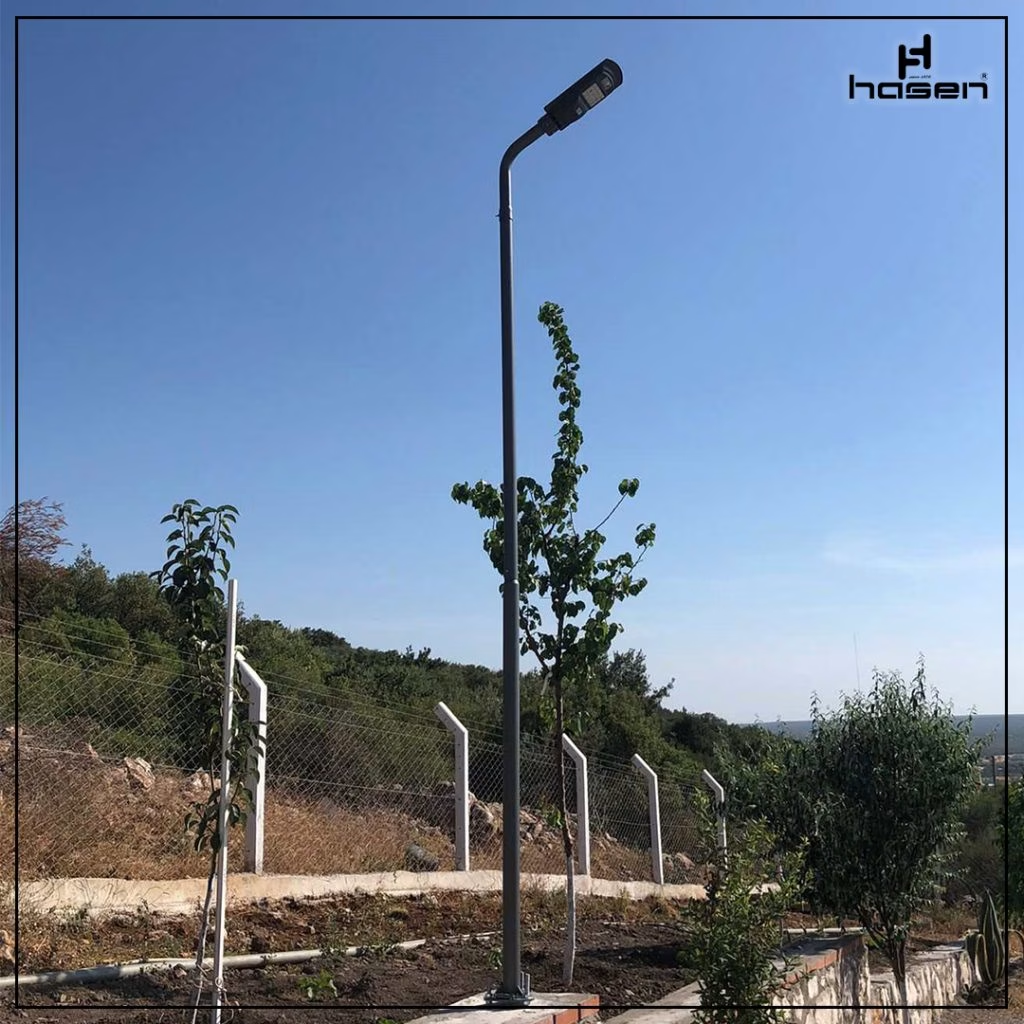
In contemporary urban planning and sustainable development projects, the selection of lighting systems is increasingly based on energy efficiency and environmental sustainability criteria. In this context, LED technology and solar-powered park lighting poles are becoming a preferred solution for modern urban projects.
Manufactured from high-quality and durable materials, these poles provide long-lasting performance while helping reduce maintenance costs. Combining aesthetic design with technical performance, park lighting poles offer a reliable and cost-effective solution for both municipalities and private-sector projects.
What Are the Differences Between Modern and Classic Park Lighting Poles?
When lighting poles are designed, the surrounding architectural character and intended use of the area should be taken into consideration.
Modern designs generally feature minimalist, simple, and functional lines. Smooth surfaces, geometric forms, and structures compatible with LED technology are among the key characteristics of modern park lighting poles.
Classic designs, on the other hand, offer a more nostalgic appearance. Decorative cast details, ornamental elements, and traditional forms are commonly used in classic park lighting poles. These designs are particularly suitable for historical squares, cultural areas, and districts where the traditional urban character is preserved.
From a functional perspective, modern models are often manufactured using lighter materials and energy-efficient lighting systems, while classic models may feature heavier and more decorative structures.
Today, hybrid models also make it possible to combine a traditional appearance with modern LED technology.
How Do Solar and LED Park Lighting Poles Work?
LED and solar systems have become increasingly important in terms of energy efficiency and sustainable urban planning.
LED lighting systems are based on semiconductor technology that converts electrical energy into light with high efficiency. Compared with conventional lighting technologies, LEDs consume less energy, offer a longer service life, and require less maintenance.
Solar-powered park lighting poles collect solar energy during daylight hours through panels mounted on the pole. This energy is stored in batteries and automatically transferred to LED luminaires at night.
This system reduces dependence on electrical infrastructure and makes installation particularly practical in natural areas and locations where grid connections are limited.
Solar systems provide significant advantages in parks, walkways, and environmentally focused projects where electrical lines may not be available.
Because they can help reduce energy consumption and carbon emissions, solar-powered lighting systems are increasingly used in sustainable urban development projects.
What Materials Are Park Lighting Poles Made From?
Material selection plays an important role in creating a durable and long-lasting outdoor lighting system.
High-quality park lighting poles are commonly manufactured from materials suitable for outdoor conditions, including steel, aluminum, cast iron, and stainless steel.
Steel poles are frequently preferred for large park areas because of their high structural strength. Aluminum poles stand out in decorative and modern projects thanks to their lighter construction and natural corrosion resistance.
Stainless steel is also a strong option for premium projects due to its combination of durability and modern appearance. For more information about its advantages in outdoor applications, you can read our guide on why stainless steel is preferred for outdoor poles.
How Durable Are Aluminum and Steel Park Lighting Poles?
Durability is one of the most important criteria when evaluating lighting poles for long-term use.
Aluminum poles are relatively lightweight, which can make installation easier, while steel poles can provide greater structural strength in areas exposed to higher wind loads.
When supported by appropriate manufacturing methods, suitable wall thicknesses, and high-quality surface protection treatments, both materials can provide reliable performance for many years.
For this reason, material selection should not be based solely on price. Site conditions, environmental exposure, structural requirements, and expected service life should also be considered.
How Are Park Lighting Poles Protected Against Outdoor Conditions?
Outdoor lighting equipment is exposed throughout the year to challenging environmental conditions such as rain, snow, sunlight, humidity, and temperature fluctuations.
Protective solutions such as galvanizing, electrostatic powder coating, and stainless steel construction therefore play an important role in extending the service life of lighting poles.
Galvanized coatings create a protective barrier against corrosion on steel surfaces. Electrostatic powder coating provides both an aesthetic finish and additional protection against environmental exposure.
In areas with high humidity or salty air, stainless steel can provide an effective solution for extending the service life of outdoor pole systems.
Where Are Park Lighting Poles Used and How Should They Be Positioned?
Today, park lighting poles are used not only in parks but also along pedestrian walkways, cycling paths, gardens, residential landscaping areas, squares, and other public spaces.
Correct positioning is essential for both safety and visual quality.
When determining pole locations, factors such as the size of the area, frequency of use, and required light distribution should be evaluated.
Along pedestrian routes, poles positioned at appropriate intervals can provide consistent visibility and improve safety. In larger park areas, taller lighting poles may be used to achieve more uniform illumination across wider spaces.
A symmetrical and balanced lighting layout can also help park lighting poles integrate naturally with the overall landscape design. In this way, the lighting system supports not only visibility but also spatial and architectural coherence.
How Should Park Lighting Poles Be Positioned in Landscape and Garden Designs?
In landscape design, lighting is used not only to improve visibility but also to create atmosphere and emphasize important architectural or natural features.
For this reason, both functional and aesthetic considerations should be evaluated when positioning park lighting poles.
In garden environments, poles installed along the edges of pedestrian paths can provide safer movement after dark.
Trees, sculptures, architectural features, and focal landscape elements can also be highlighted with softer lighting to create a more visually appealing environment.
Lighting placement should be carefully planned to provide sufficient visibility without creating unnecessary glare or excessive light levels.
How Should Park Lighting Poles Be Selected for Residential Complexes and Public Areas?
When selecting park lighting poles for residential landscaping and public park projects, durability, energy efficiency, and aesthetic compatibility should be considered together.
Models equipped with LED or solar lighting technology can help reduce long-term energy consumption and maintenance requirements.
The most suitable lighting pole depends on the surrounding architecture, scale of the project, environmental conditions, and intensity of use.
For projects with specific dimensions, architectural requirements, or technical conditions, custom-manufactured pole systems can also provide a project-specific solution.
Well-designed and properly manufactured park lighting poles can make public areas safer, more comfortable, and more visually appealing for nighttime use.