

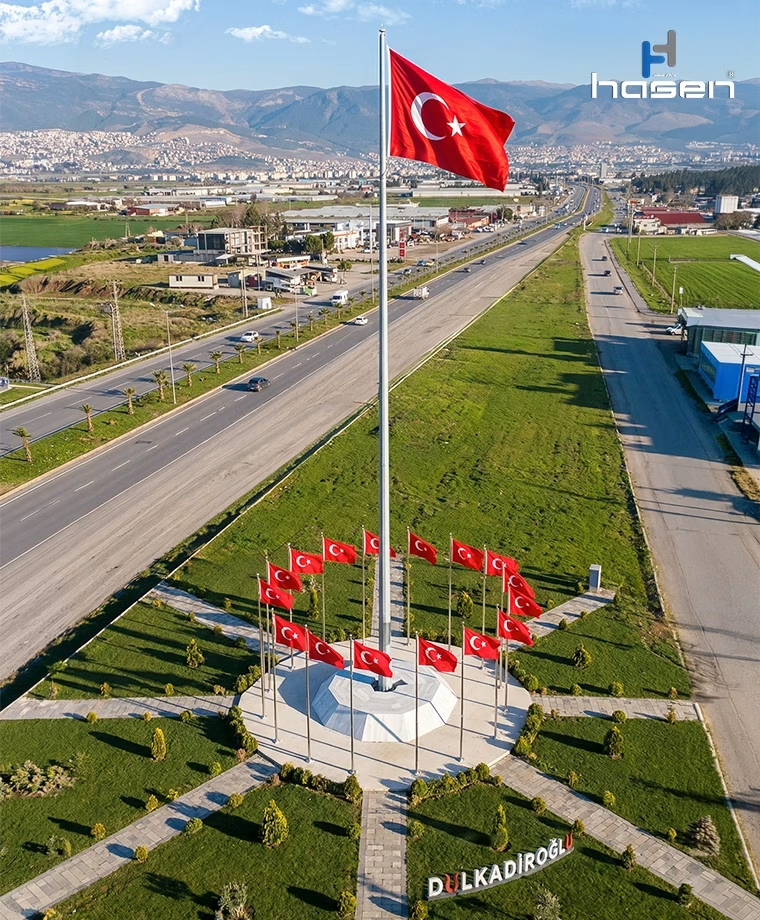
A 7 meter flagpole provides greater visibility than standard 6-meter poles and is often preferred in front of medium- and large-scale architectural structures as a symbol of prestige and institutional identity.
These flagpoles are commonly used at plaza entrances, municipal buildings, large educational campuses, factory grounds, military facilities, corporate headquarters, and public institutions. When selected in proportion to the height and scale of the surrounding architecture, a 7-meter flagpole creates a balanced and impressive visual profile.
Its additional height allows the flag to be seen clearly from greater distances, significantly improving visibility. For this reason, a 7-meter pole is not only an aesthetic architectural element but also a strong visual symbol of corporate identity and institutional presence.
For more information about selecting the correct pole height for different projects, you can review the Flagpole Length Guide.
Material Selection for 7 Meter Flagpoles
As pole height increases, the structural load created by wind also becomes more significant. For safe and stable long-term use, 7 meter flagpoles are generally manufactured from materials with sufficient structural strength and resistance to outdoor conditions, such as stainless steel or galvanized steel.
The correct material helps maintain structural performance under challenging weather conditions while also contributing to a longer service life.
How Effective Is a Stainless Steel 7 Meter Flagpole Against Corrosion?
Stainless steel provides strong resistance to corrosion, oxidation, and rust thanks to its alloy composition.
For general outdoor applications, AISI 304 stainless steel is widely used in flagpole manufacturing. In more aggressive environments, such as coastal areas or locations exposed to high levels of salt or industrial pollutants, the appropriate stainless steel grade should be selected according to the environmental conditions and engineering requirements of the project.
Hasen stainless steel flagpoles are manufactured using AISI 304 grade stainless steel and combine corrosion resistance with a modern architectural appearance.
Which Climate Conditions Are Suitable for Galvanized 7 Meter Flagpoles?
Hot-dip galvanized poles are manufactured by applying a protective zinc coating to the steel surface.
This zinc layer helps isolate the underlying steel from environmental exposure and provides effective corrosion protection. Galvanized steel poles can therefore be suitable for continental climates, cold environments, industrial projects, and various outdoor applications.
Depending on the architectural requirements of the project, galvanized poles can also be finished with suitable coating or painting systems to achieve a specific color or appearance.
Dimensions and Structural Criteria for 7 Meter Flagpoles
What Flag Size Is Suitable for a 7 Meter Flagpole?
The relationship between pole height and flag dimensions directly affects both visual proportions and wind loading.
For a 7 meter flagpole, the appropriate flag size should be determined by considering the dimensions and weight of the flag, the structural capacity of the pole, wind conditions, and the characteristics of the installation site.
A flag that is too small may appear visually disproportionate, while an excessively large flag can significantly increase wind loads on the pole and foundation.
For this reason, flag dimensions should be selected according to project-specific structural requirements rather than height alone.
The Flagpole Length Guide provides additional information about the relationship between flag dimensions, pole height, visibility, and wind load.
Installation and Anchorage Safety for 7 Meter Flagpoles
For a 7-meter flagpole to operate safely for many years, installation should be carried out according to appropriate engineering requirements.
Correct ground preparation, foundation design, flange dimensions, and anchoring are among the most important factors affecting structural stability.
How Should the Reinforced Concrete Foundation Be Prepared?
The dimensions of the foundation should be determined according to the soil conditions, pole structure, wind loads, flag dimensions, and project-specific structural calculations.
A reinforced concrete foundation transfers the loads created by the flagpole safely into the ground.
Rather than using a fixed foundation depth for every project, the foundation should be designed according to site conditions and engineering calculations.
How Should the Anchor System Be Installed?
Anchor rods are positioned in accordance with the holes and dimensions of the pole’s base flange during preparation of the concrete foundation.
These anchoring components create the structural connection between the pole and the foundation.
Correct positioning and installation are important because an improperly installed anchor system can affect the vertical alignment and long-term stability of the pole.
Hasen Flagpoles offers different anchoring components among its flagpole accessories, including concrete anchors, existing-concrete anchors, base components, and decorative covers.
How Is the Pole Aligned and Secured?
After the concrete foundation has achieved sufficient strength, the flagpole is positioned over the anchors through its base flange.
The pole is then aligned vertically using appropriate adjustment and leveling methods.
After correct alignment is confirmed, the connection elements are tightened according to the technical requirements of the installation.
A decorative base cover can then be used to conceal the flange and anchor components, providing both protection and a cleaner architectural appearance.
How Does a 7 Meter Flagpole Withstand Strong Winds?
Wind resistance depends on far more than the height of the flagpole.
Pole diameter, wall thickness, material type, pole geometry, flag dimensions, foundation design, and regional wind conditions should all be evaluated together.
Conical or appropriately engineered stepped structures can help distribute structural loads efficiently while maintaining the required strength.
For this reason, the correct wall thickness should always be determined according to structural calculations and project requirements rather than relying on a single fixed value for every 7-meter pole.
Mechanical Systems Used in 7 Meter Flagpoles
In addition to height and material quality, the mechanical systems incorporated into a 7 meter flagpole have an important influence on performance, security, aesthetics, and ease of operation.
Modern flagpole systems can use internally routed ropes or cables and rotating mechanisms instead of conventional external rope configurations.
These systems provide a cleaner appearance while also protecting important mechanical components from environmental exposure and unauthorized access.
What Is the Purpose of a 360-Degree Rotating Mechanism?
A 360-degree rotating mechanism is positioned at the top of the flagpole and rotates around its axis according to wind direction.
The system helps prevent the flag from wrapping around the pole as wind direction changes.
This reduces unnecessary twisting of the flag and supports smoother operation.
Hasen Flagpoles offers a 360-degree rotating mechanism designed for internally cabled flagpole systems.
What Are the Advantages of an Internal Rope System?
In an internal rope or cable system, the mechanism used to raise and lower the flag is located inside the flagpole.
Compared with an external rope configuration, this provides several advantages:
- Creates a cleaner and more professional appearance
- Reduces rope noise caused by contact with the pole in windy conditions
- Protects the rope or cable from weather exposure
- Helps prevent unauthorized access to the flag-raising mechanism
- Reduces direct exposure of mechanical components to external conditions
These characteristics make internal systems particularly suitable for corporate buildings, public institutions, campuses, and prestigious architectural projects.
How Are 7 Meter Flagpole Prices Calculated?
The price of a 7 meter flagpole depends on its complete technical specification rather than height alone.
The main factors affecting pricing include:
- Material type, such as stainless steel or galvanized steel
- Stainless steel grade and technical specifications
- Pole wall thickness
- Base and top diameter
- Pole geometry and manufacturing method
- Internal or external rope system
- Manual or motorized flag-raising mechanism
- 360-degree rotating mechanism
- Anchor and flange system
- Surface treatment and finishing
- Flag dimensions
- Installation requirements
- Transportation costs
- Project-specific engineering requirements
You can find more detailed information in Hasen Flagpoles’ guide on how flagpole prices are determined.
What Should You Consider When Buying a 7 Meter Flagpole?
When purchasing a 7 meter flagpole, appearance should not be the only consideration. Technical specifications directly influence safety, durability, and long-term performance.
Why Are Material Quality and Surface Treatment Important?
Stainless steel and galvanized steel are widely used for outdoor flagpoles because of their durability.
In stainless steel products, the selected material grade affects corrosion resistance. In galvanized products, coating quality and surface protection play an important role in service life.
Additional surface treatments may also be used according to environmental and architectural requirements.
How Should Wall Thickness and Structural Strength Be Evaluated?
The flagpole body should provide sufficient structural strength to withstand the expected wind loads at the installation location.
Instead of evaluating wall thickness independently, pole diameter, material grade, height, flag dimensions, local wind conditions, and foundation design should be considered together.
For outdoor installations, obtaining technical information about the manufacturer’s structural design criteria is particularly important.
How Should You Choose Between One-Piece and Multi-Part Flagpoles?
One-piece and modular flagpoles offer different advantages.
One-piece poles can provide a continuous structural appearance with fewer connection points, while modular or multi-section poles can simplify transportation and installation.
The most appropriate configuration depends on the location, transportation conditions, installation method, and engineering requirements of the project.
Why Should an Internal Rope System Be Preferred?
Internal rope systems provide a cleaner appearance because the raising mechanism is concealed inside the pole.
They also provide additional protection against weather exposure and unauthorized access.
For public institutions, corporate facilities, and areas accessible to large numbers of people, these systems can provide both aesthetic and operational advantages.
What Should Be Checked in the Base Flange and Installation Details?
The flange is one of the most important structural connection points between the flagpole and its foundation.
Flange dimensions, material thickness, anchor placement, foundation design, and fastening details should all be appropriate for the structural loads of the project.
A correctly engineered foundation and anchoring system are essential for maintaining pole stability.
What Certifications and Standards Should Be Considered?
When selecting a flagpole manufacturer, relevant manufacturing quality systems, product documentation, material specifications, and applicable project standards should be reviewed.
The exact certificates required may vary according to the product, country of installation, tender specifications, and project requirements.
For this reason, certification should be evaluated according to the specific flagpole model and intended application rather than assuming that every certification applies to every product.
Why Are Warranty and Technical Support Important?
Warranty conditions, availability of replacement components, technical assistance, and after-sales support should also be considered when selecting a manufacturer.
Flagpoles are long-term outdoor investments, and access to compatible mechanisms, accessories, and technical support can simplify future maintenance and operation.
In summary, appropriate materials, sound engineering, reliable mechanical components, and professional installation are among the most important considerations when choosing a 7 meter flagpole.
Turkish Flag Regulations and Installation Considerations
Where the Turkish flag is displayed, installation and use should comply with the applicable provisions of Turkish flag legislation and related regulations.
The flagpole should be positioned in a location that provides suitable visibility, dignity, and safe operation while also taking the architecture and intended use of the site into consideration.
The raising and lowering mechanism should operate reliably, including in circumstances where the flag needs to be lowered to half-mast in accordance with official requirements.
For installations intended for nighttime display, suitable lighting can also be incorporated into the project so that the flag remains clearly visible.
The flag and its attachment system should always be installed so that the flag can be displayed appropriately without unnecessary contact with the ground or surrounding obstacles.