


Flags represent the identity of an institution, a city, or a country. The most important structural element carrying this powerful symbol, ensuring it always flies correctly, is the flagpole. Flagpoles, which are constantly exposed to wind, rain, sun, and air pollution outdoors, can lead to both aesthetic and safety issues if not maintained regularly. Therefore, as a company serving the industry for half a century, we have prepared a blog post compiling information on how flagpole maintenance should be performed. We recommend reading this guide, where you will also find information about the long-lasting usage advantages of stainless steel flagpoles manufactured by Hasen Paslanmaz. This article serves as a complete guiding resource for those seeking an answer to the question: “How to maintain a flagpole?” If you are ready, here we go…
Flagpoles are not just carriers; they are also architectural elements that reflect the prestige of institutions. For this reason, although the subject of maintenance is often overlooked, it actually plays an extremely critical role.
The impact of outdoor conditions on flagpoles:
Flagpoles are outdoors every day of the year. Sunlight, rain, snow, wind, dust, exhaust gases, and salty air in coastal areas can cause contamination and wear on metal surfaces over time. If flagpole maintenance is not performed regularly, these effects manifest as surface stains and mechanical wear.
Contribution of regular maintenance to service life:
Correctly performed flagpole maintenance ensures that the pole maintains its first-day brightness. At the same time, it contributes to the healthy operation of the mechanism, rope, and connection points. This both extends the service life and minimizes potential malfunctions and safety risks.
The importance of aesthetics and safety in corporate areas:
For schools, municipalities, public institutions, and private enterprises, the flagpole is a part of the corporate image. An unmaintained pole can create a negative impression of the institution. In addition, loosened connections or worn ropes pose serious safety risks. Therefore, regular inspection in line with a flagpole maintenance guide is essential.

Correct cleaning practices are of great importance for ensuring that stainless steel flagpoles remain long-lasting, aesthetic, and safe. Cleaning, which is one of the most critical steps in the question of “how to perform flagpole maintenance,” both protects the surface appearance and prevents potential corrosion risks. Thanks to regular cleaning performed with the correct methods, stainless steel can maintain its first-day brightness for many years.
Daily and periodic cleaning methods
Daily cleaning generally involves removing visible dust and light dirt. Using a soft cloth and clean water is usually sufficient at this stage. Especially in urban areas, the thin layer that accumulates on the surface due to exhaust gases and air pollution should be wiped off regularly. Periodic cleaning, on the other hand, is a more comprehensive application. In this cleaning, performed monthly or at intervals determined by environmental conditions, mild detergents suitable for stainless flagpole maintenance should be preferred. The surface should be gently wiped with pH-neutral cleaning products diluted with warm water, then rinsed with plenty of water. This practice forms the basis of the flagpole cleaning process and prevents the formation of permanent dirt on the surface.
Cleaning materials to be usede
Correct material selection is a decisive factor in stainless steel cleaning methods. Microfiber cloths provide effective cleaning without creating scratches on stainless steel surfaces. Additionally, pH-neutral liquid cleaning products ensure hygiene without damaging the protective surface layer of the steel. It is highly recommended to wipe the surface with a dry and clean cloth after cleaning. This process prevents water spots and supports the bright appearance of the flagpole. Especially for products used outdoors, this step is a small but effective detail for outdoor stainless steel maintenance.
Chemicals and practices to avoid
Although stainless steel is a durable material, incorrect cleaning products can cause serious damage. Acidic, chlorinated, and abrasive chemicals can disrupt the surface structure of stainless steel, causing dullness and staining. Practices such as wire brushes, hard sponges, and sandpaper create irreversible scratches on the surface. Furthermore, applying high-pressure water from too close can lead to deformation, especially at connection and anchorage points. Such incorrect practices make the flagpole rust prevention process difficult over time and increase maintenance costs. Therefore, controlled and gentle methods should always be preferred during cleaning.
The question “How to maintain a flagpole?” is not limited to surface cleaning alone. For long-lasting, safe, and trouble-free use, the technical components of the flagpole must also be inspected regularly. Mechanical parts, connection points, and wear due to environmental effects are among the most critical headings of the maintenance process.
1-Inspection of mechanism and rope systems
For the flagpole to function correctly, the mechanism and rope systems must work flawlessly. Ropes that allow the flag to be raised and lowered easily can wear out over time due to friction and external factors. Therefore, as part of stainless flagpole maintenance, the ropes should be regularly checked for fraying, thinning, or the risk of breaking. Pulleys and locking mechanisms are also important parts of the maintenance process. These parts must be clean, properly aligned, and moving freely. When necessary, appropriate lubrication should be applied, but products that will not damage the stainless steel must be preferred during this process. Otherwise, problems such as the flag getting stuck, sudden falling, or the mechanism locking up may occur.
2-Maintenance of anchorage and connection points
The anchorage and connection points where the flagpole is fixed to the ground are of vital importance for safety. Especially for tall poles, the strength of these points plays a critical role in both the stability of the pole and the safety of the people around it. In line with the flagpole maintenance guide, the loosening status of bolts and fasteners should be checked periodically. Accumulation of dirt, water, and moisture in areas in contact with the ground can cause problems over time. Therefore, anchorage points should be kept clean, and professional support should be sought when necessary. Thanks to correct maintenance, the flagpole rust prevention process becomes more effective, and potential structural risks are eliminated in advance.
3-Wear due to wind and weather conditions
Flagpoles are constantly exposed to wind loads and variable weather conditions. Especially in open areas, coastal strips, and high-altitude regions, vibrations caused by wind can cause metal fatigue over time. This situation can lead to microscopic deformations in the body of the pole and at connection points. Additionally, rain, snow, and sunlight cause dirt accumulation and aesthetic losses on the surface. Therefore, outdoor stainless steel maintenance should be supported not only by cleaning but also by regular structural inspections. Detailed inspections carried out during seasonal transitions ensure safe use and significantly extend the service life of the flagpole.
Another issue as important as the question of “how to maintain a flagpole?” is how often maintenance should be performed. This is because maintenance intervals vary depending on the environmental conditions where the flagpole is located, the intensity of use, and weather conditions. Maintenance performed at the correct periods ensures both the preservation of the aesthetic appearance and the prevention of unexpected malfunctions.

Maintenance periods for urban and coastal areas
Flagpoles located in urban areas are exposed to factors such as exhaust gases, air pollution, and dust. In such environments, it is recommended to perform general cleaning and inspection at least 2-3 times a year for stainless flagpole maintenance. Regular cleaning of dirt accumulated on the surface prevents the stainless steel from dulling and staining. In coastal areas, maintenance periods should be kept shorter. The salt content in the sea air creates a more aggressive effect on metal surfaces. Therefore, for flagpoles located in areas close to the coastline, performing flagpole cleaning and technical inspections every 3-4 months provides a great advantage for long-lasting use. This approach is one of the most effective steps in the flagpole rust prevention process.
Maintenance frequency in high-use areas
In high-use areas such as squares, public institutions, schools, official ceremony grounds, and shopping centers, flagpoles are both used more frequently and are more visible. In such areas, not only aesthetics but also safety is a priority. Therefore, it is recommended to perform monthly visual inspections within the scope of the flagpole maintenance guide. Rope systems, mechanisms, and connection points should be checked regularly; even the smallest sign of wear or loosening should be taken into account. Regular maintenance performed in high-use areas prevents potential accidents while preserving the prestige of corporate areas.
Seasonal maintenance recommendations
Seasonal transitions are the most suitable time periods for flagpole maintenance. Maintenance performed especially before winter increases the durability of the pole against harsh weather conditions such as rain, snow, and storms. Post-winter inspections ensure the detection of wear that cold weather and wind may have caused. Detailed cleaning and technical inspections carried out in the spring and autumn months create an ideal maintenance routine for outdoor stainless steel maintenance. Thanks to this regular approach, the flagpole can be used safely, aesthetically, and trouble-free throughout the year.
The first feature that comes to mind regarding stainless steel is its high resistance to corrosion. Therefore, the answer to the question “Does rusting occur on stainless flagpoles?” is one of the topics users are most curious about. To answer this question briefly, the risk of rusting is extremely low with the right material, correct production, and regular flagpole maintenance. However, in some cases, stains that look like rust may form on the surface.
Why might stainless steel look like it’s rusting?
Stainless steel is resistant to corrosion thanks to the protective chromium oxide layer on its surface. However, flagpoles used outdoors are constantly exposed to factors such as dust, exhaust gases, salt water vapor, and industrial pollution. These environmental residues can form brown or yellowish stains on the surface over time. Such appearances are often confused with actual rusting. However, this situation usually stems from foreign particles accumulating on the surface and can be easily removed with correct flagpole cleaning. At this point, the correct application of stainless steel cleaning methods is of great importance.
The difference between surface stains and actual corrosion
Surface stains do not damage the structural integrity of the stainless steel. It is only an aesthetic issue and can be eliminated with regular stainless flagpole maintenance. Actual corrosion means the deterioration of the metal’s internal structure and is usually seen in materials that are neglected for a long time, where incorrect cleaning products are used, or in low-quality materials. In the case of actual corrosion, blistering, pitting, and metal loss are observed on the surface. Therefore, every color change on the surface should not be evaluated as rust; it should be correctly distinguished whether it is a surface stain or corrosion through a detailed examination.
Precautions to be taken for long-lasting use
A few basic precautions are sufficient for stainless flagpoles to be used for many years without problems. First of all, regular cleaning should not be neglected, and dirt and residue should not be allowed to accumulate on the surface. Especially for poles located in coastal areas, maintenance intervals should be kept more frequent to prevent flagpole rusting. In addition, acidic and chlorinated cleaning products should be avoided, and only products suitable for stainless steel should be preferred. The use of quality materials is also an integral part of this process. Poles produced from high-quality stainless steel, such as AISI 304, provide a great advantage to the user in terms of outdoor stainless steel maintenance. Thanks to correct maintenance habits and conscious use, stainless flagpoles maintain both their aesthetic appearance and structural durability for many years.
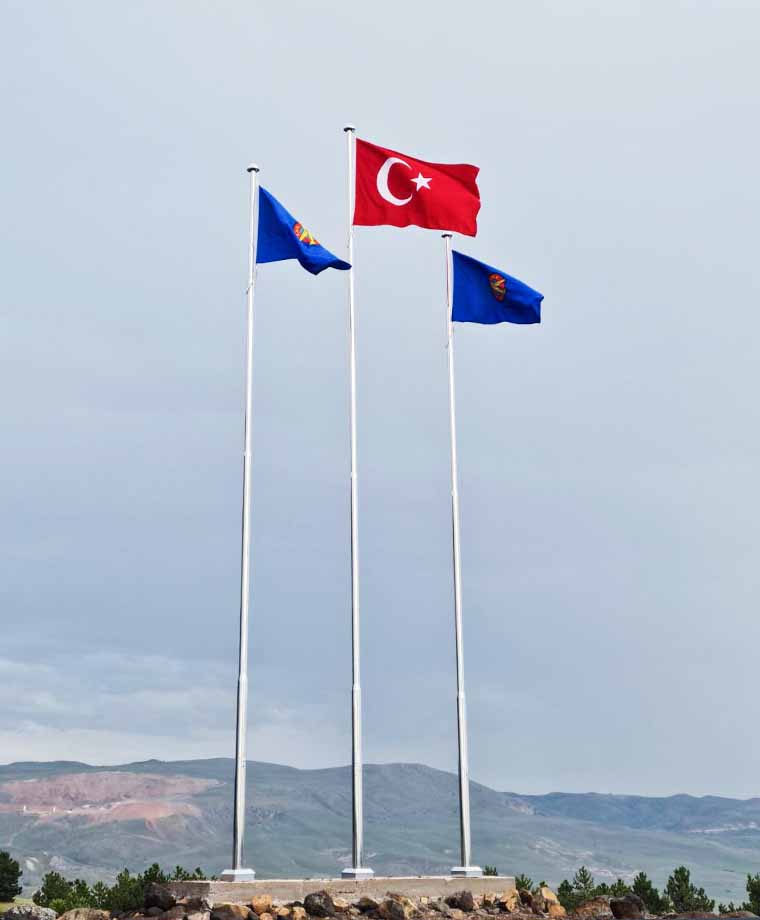
Correct cleaning practices are of great importance for ensuring that stainless steel flagpoles remain long-lasting, aesthetic, and safe. Cleaning, which is one of the most critical steps in the question of “how to perform flagpole maintenance,” both protects the surface appearance and prevents potential corrosion risks. Thanks to regular cleaning performed with the correct methods, stainless steel can maintain its first-day brightness for many years.
Maintenance standards in school and public areas
Maintenance of flagpoles located in public areas such as schools, municipal buildings, district governorates, official ceremony areas, and squares must be carried out within the framework of certain standards. In these areas, priority is always safety. The stability of the pole, the smooth operation of the rope system, and the safety of the connection points must be checked regularly. Furthermore, the fact that the poles used in these areas are clean and well-maintained is an indicator of corporate seriousness. Stainless flagpole maintenance should not be limited to surface cleaning but should also be supported by mechanism, anchorage, and body inspections. Recording maintenance procedures in public areas is important for creating a sustainable maintenance plan.
Periodic checklist
A simple but clear periodic checklist to be created for institutions and municipalities ensures easier management of the maintenance process. During periodic inspections, the following basic points must be reviewed: -Whether there is dirt, stains, scratches, or visible deformation on the flagpole surface
Thanks to these inspections, flagpole cleaning and technical maintenance processes achieve a regular structure. Detecting minor problems at an early stage both reduces safety risks and prevents high maintenance costs that may occur in the future.
Situations requiring professional maintenance
Not every maintenance procedure can be carried out with in-house resources. Especially for tall flagpoles, heavy wear, or mechanical failures, professional maintenance services must be obtained. When serious wear in the rope system, deformation at anchorage points, or structural damage to the body is detected, intervention should not be delayed. Additionally, outdoor stainless steel maintenance for poles located in seaside areas, industrial zones, or areas with excessive wind requires expertise. In such cases, maintenance performed by professional teams ensures safe use and makes the flagpole rust prevention process more effective. For institutions and municipalities, maintenance processes carried out with planned, recorded, and professional support ensure that flagpoles are used safely, aesthetically, and trouble-free for many years.
Hasen Paslanmaz makes maintenance processes more predictable and sustainable through the high-quality standards and engineering-oriented approach it adopts in flagpole production. Thanks to the qualified stainless steel used in production, precise manufacturing details, and systematic technical solutions, the question of “how to maintain a flagpole” turns into a practical and safe process for users. The integrity of correct material selection, a correct production mindset, and after-sales technical support offers the advantage of long-lasting use while minimizing the need for maintenance.
Quality of stainless steel used in production
The stainless steel used in Hasen Paslanmaz flagpoles is selected to show high resistance to outdoor conditions. Especially AISI 304 quality stainless steel stands out with its resistance to corrosion and aesthetic surface. This quality facilitates stainless flagpole maintenance processes while preventing surface deterioration in the long run. Thanks to the use of high-quality stainless steel, dirt adhesion on the surface of the pole is also reduced, and cleaning processes are completed in a shorter time and with less intervention. This provides a significant advantage in terms of outdoor stainless steel maintenance.
Long-lasting and low-maintenance structures
Hasen Paslanmaz flagpoles make a difference not only with material quality but also with engineering details. Thanks to the solid body structure, balanced anchorage systems, and reliable mechanisms, the need for maintenance is kept at a minimum level. This ensures that routine inspections carried out in line with flagpole maintenance are sufficient. Due to the long-lasting structure, the risk of surface deformation, mechanical failure, and structural wear is reduced. Thus, both maintenance costs decrease and the flagpole rust prevention process becomes more effective. For institutions and municipalities, this means a sustainable and economic solution.
After-sales support and technical consultancy
One of the most important advantages offered by Hasen Paslanmaz is after-sales support services. Following the installation of the flagpole, users can receive technical consultancy on maintenance and usage issues. This support ensures that the question of how to maintain a flagpole is correctly addressed in practice. Providing periodic maintenance recommendations, guidance on potential technical issues, and support for professional maintenance needs are part of the long-term cooperation Hasen Paslanmaz establishes with the user. Thanks to this approach, flagpoles offer not only a high-quality product but also a reliable usage experience.
Along with the question of how to maintain a flagpole, one of the most curious topics is the frequency of maintenance. Generally, for flagpoles located in urban areas, it is recommended to perform maintenance at least 2–3 times a year. In coastal regions, industrial areas, and locations with high wind exposure, stainless flagpole maintenance should be carried out at more frequent intervals, approximately every 3–4 months. Additionally, regular visual inspections ensure the early detection of potential problems.
It is not strictly necessary to use a special cleaning product for stainless steel flagpoles. However, products that are pH-neutral and non-abrasive, in accordance with stainless steel cleaning methods, should be preferred. Acidic or chlorinated chemicals, or those that could scratch the surface, may damage the protective structure of the stainless steel. Regular flagpole cleaning performed with the correct products both preserves the aesthetic appearance and facilitates the maintenance process.
Most of the stains seen on stainless steel flagpoles are not actual rusting, but environmental residues accumulated on the surface. Such situations can be easily resolved with correct cleaning applications. However, if there is blistering, pitting, or structural deterioration on the metal surface, this may be an indicator of actual corrosion. In such a case, whether the pole can be reused should be determined as a result of a technical evaluation. Early intervention is of great importance in terms of flagpole rust prevention.