

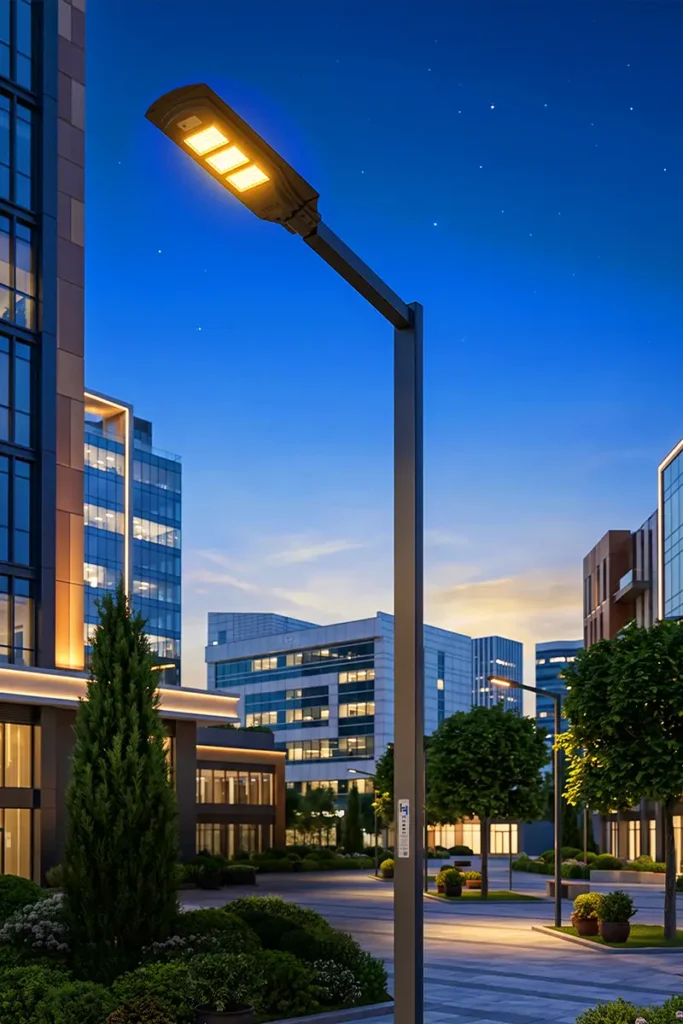
One of the most pressing challenges of modern urban life is the gradual loss of green spaces. This is why parks and gardens, which offer a welcome escape from the concrete landscape of the city, attract visitors throughout the day and evening. After dark, carefully planned lighting poles are essential to keeping a park attractive and comfortable to use. When placed in the right locations, park and garden lighting poles can transform dark areas into safer routes while also highlighting the architectural character of an outdoor space.
Choosing park and garden lighting poles involves more than considering their appearance or light output. Pole height, luminaire light distribution, installation method, material quality, wind loads and outdoor conditions must all be evaluated together. Drawing on the expertise of Hasen Flagpoles in outdoor equipment, this guide explores the technical details and practical selection criteria to consider when choosing the right lighting pole. After all, the comfort of walking through a park or garden after sunset is also the result of sound engineering.
What Are Park and Garden Lighting Poles?
Park and garden lighting poles are ground-mounted support structures designed to carry luminaires powered by LEDs or other light sources. By positioning outdoor light fixtures at a suitable height, these systems help direct light toward the areas where it is needed. Depending on their intended application, they can be manufactured with cylindrical, tapered, polygonal or custom-designed shafts.
Where Are Park and Garden Lighting Poles Used?
Their applications extend well beyond urban parks. Lighting solutions of different sizes and designs are particularly useful in the following settings:
- Public parks and recreation areas: Used to illuminate walking paths, seating areas, children’s play areas and rest spots. For more information on planning outdoor illumination for parks and pedestrian routes, explore the range of lighting poles.
- Villas and private gardens: Suitable for garden paths, planted areas, pool surroundings and entrances. It is also useful to understand the factors affecting garden lighting pole prices when planning a project.
- Residential complexes and housing developments: Used along access roads, in shared spaces, around parking areas and as part of landscaping projects.
- Hotels and resorts: Provide lighting for outdoor dining areas, garden passages, pool surroundings and pedestrian routes.
- Historic sites: Help preserve the visual character of heritage locations, monuments and historic buildings, bring out architectural details and allow visitors to move around more safely at night.
- Campuses and social facilities: Make it easier to navigate extensive outdoor areas and support their use after dark.
- Roads and squares: Help illuminate pedestrian circulation routes, landscape features and public open spaces.
How to Choose the Right Lighting Pole for Parks and Gardens
The effectiveness of a lighting pole becomes clear after installation, when its light distribution across the ground can be assessed. If a pole is too short, concentrated pools of brightness may appear in certain areas. If it is too tall, the luminaire may struggle to deliver light efficiently to the intended location. The following criteria are important when making a selection:
- Size of the area to be illuminated: Assess the length, width, ground conditions and surrounding obstructions. Check in advance whether trees, building facades or tall landscape features could block the light.
- Light distribution: The wattage of a luminaire is not the only consideration; the angle and area over which it distributes light are equally important. Luminaires with asymmetrical optics may offer advantages along linear spaces such as walking paths.
- Pole height and spacing: Pole positions should be determined through lighting calculations. The beam angle of each luminaire, its mounting height and the target illuminance level need to be considered together.
- Outdoor conditions: Rain, humidity, UV exposure, temperature fluctuations and wind all affect the service life of a pole. In coastal areas in particular, salty air increases the risk of corrosion on metal surfaces.
- Structural strength: Shaft thickness and geometry, base plates, anchor connections and the load imposed by the luminaires should be assessed as a complete system. Floodlights with large exposed surfaces can increase wind loads on the pole.
- Maintenance and operating costs: Replaceable luminaires, easy access to electrical connections and straightforward surface maintenance are advantages over the long term.
Park and Garden Lighting Pole Models and Types
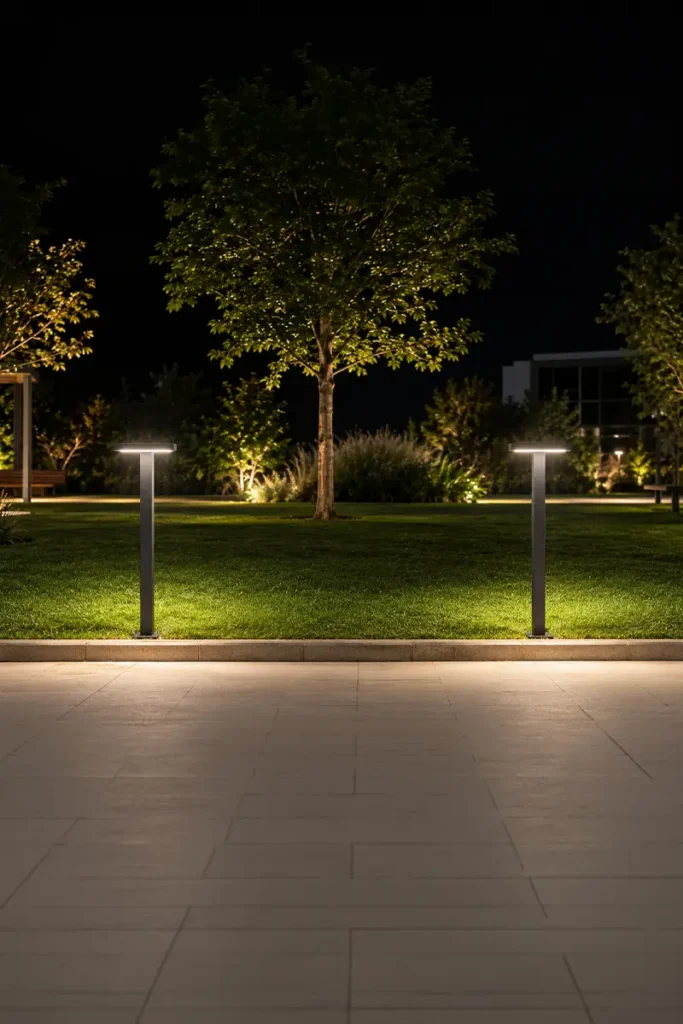
Different project requirements are reflected in the shaft designs and luminaire-mounting configurations of lighting poles. The most common types of park and garden lighting poles include:
Single-Arm Lighting Poles
Designed to direct light in one direction. They are used along walking paths, garden passages and internal routes in residential developments.
Double-Arm Lighting Poles
Allow luminaires to be mounted facing two different directions. They are commonly used along wider roads and in areas similar to central medians.
Decorative Lighting Poles
Decorative lighting poles complement the architectural appearance of a landscape through classical or modern design details. They are used in villa gardens, hotel grounds, historic settings and relaxation areas.
Floodlight Support Poles
Floodlight poles can support one or more floodlights. They are used in large outdoor spaces, sports facilities and event areas.
Solar-Powered Lighting Poles
Solar lighting poles use a solar panel and a battery system. They can be considered for sites without a power connection or where installing cables would be difficult.
How Tall Should Garden Lighting Poles Be?
The height of a lighting pole used in a park or garden directly affects how and where its light is experienced. Pole height and the distance between poles therefore need to be calculated carefully.
A luminaire mounted too low can concentrate light within a narrow area. Conversely, an unnecessarily tall pole may look out of proportion in a small garden and make it harder to direct light where it is needed. There is therefore no single standard height for all park and garden lighting poles. The ranges below can provide a starting point during preliminary design, but final dimensions require photometric calculations and a structural assessment.
Application area | Example pole height | Reason for selection |
Small private and villa gardens | 2–3 metres | Controlled lighting that complements the landscape |
Garden walking paths | 3–4 metres | Appropriate light distribution along pedestrian routes |
Roads within residential complexes and parks | 4–6 metres | Illumination of wider circulation areas |
Large parks and recreation areas | 6–8 metres | Wider light distribution and coverage |
Large open spaces | 8 metres and above | Project-specific, high-output lighting |
What Are the Advantages of LED Park and Garden Lighting Poles?
LED lighting poles are widely used, and for good reason: LED technology offers low energy consumption and a long operating life. Beyond these two key benefits, LED systems offer the following advantages:
- Energy efficiency: LEDs can provide the same illuminance with lower electricity consumption.
- Instant illumination: LEDs produce light as soon as they are switched on, without a warm-up period.
- Optical control: Different beam distributions make it possible to design suitable solutions for walkways, parking areas and landscaped spaces.
- Smart control systems: Motion sensors, timers and dimming systems can help manage energy consumption according to demand.
- Reduced maintenance needs: When suitable products are selected, long-life components can reduce maintenance requirements and the frequency of lamp replacement.
Why Does Material Selection Matter for Outdoor Lighting Poles?
A lighting pole is exposed to rain, sunlight, wind and changing temperatures throughout the year. Its base, particularly where it meets the ground, may face additional wear from moisture and standing water. The material used to manufacture a pole therefore affects not only its appearance but also its maintenance needs and service life. The following table compares common lighting pole materials and important selection considerations. For a more detailed discussion of corrosion resistance, see our guide to stainless steel for outdoor poles.
Material | Key characteristics | Points to consider |
Stainless steel | Corrosion resistance, an attractive finish and long-term service potential | Select the appropriate steel grade, alloy composition and surface finish. |
Galvanized steel | Mechanical strength and corrosion protection provided by a zinc coating | Check coating thickness and protection at cut edges and welds. |
Aluminum | Low weight, corrosion resistance and easier installation | Wall thickness, alloy selection and connections must suit the design load. |
Frequently Asked Questions
How Tall Should Park and Garden Lighting Poles Be?
Heights of 2–3 metres may be considered for small gardens, while 4–8 metres may be suitable for parks and shared outdoor spaces. Larger open areas may require taller poles. The final height depends on the size of the site and the light distribution of the luminaire.
What Types of Lighting Poles Are Used in Parks?
Common types include single-arm, double-arm, decorative, floodlight support and solar-powered lighting poles.
How Far Apart Should Garden Lighting Poles Be Installed?
Spacing of around 8–15 metres may be considered at the preliminary design stage, but no single distance is appropriate for every project. The correct spacing should be established through photometric calculations based on pole height, luminaire light distribution and the required lighting level.
What Are the Benefits of Using LED Lighting in Parks?
LED luminaires offer low energy consumption, long service life, instant illumination and controlled light distribution. These advantages make them a common choice for park lighting.
Which Materials Are Best for Outdoor Lighting Poles?
Stainless steel, galvanized steel and aluminum are commonly used. The appropriate material depends on local humidity, rainfall, salt exposure and wind conditions.