

Lighting poles, which often go unnoticed yet play a vital role in our lives, do much more than just illuminate our surroundings. They complete urban aesthetics, ensure safety, and when integrated with modern technology open the doors to significant energy savings. These “silent companions,” which accompany you during a stroll in the park, while playing with your children, or as you return home late at night, continue to light our path from the past to the present. As an industry leader with half a century of experience, Hasen Paslanmaz contributes to the urban landscape by prioritizing aesthetics alongside functionality, offering solutions that harmonize with modern cities. But what exactly is a lighting pole? How many types are there, and where are they used? If you are curious about the historical evolution of these silent heroes of urban life and want to discover fascinating facts about lighting poles, then keep on reading.
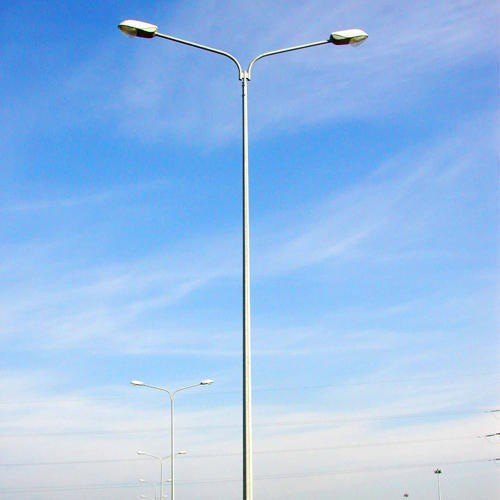
A lighting pole is a vertical structure that supports electric-powered light sources and is used to illuminate the surrounding environment. They are generally manufactured from durable materials such as steel, aluminum, concrete, or stainless steel. These poles are utilized in streets, avenues, parks, squares, and other open spaces to ensure safety, enhance visual aesthetics, and improve nighttime visibility.
Throughout history, humans have developed various methods of light sources to ensure safety at night, make living spaces more functional, and maintain social life after dark. This necessity, which began with simple light sources, has evolved over time into the advanced lighting poles that are now indispensable parts of modern cities. In fact, the historical development of lighting poles is the most concrete manifestation of humanity’s struggle against darkness and the need to illuminate the night. Therefore, before exploring the features of modern lighting pole models, let us take a short journey into the past and look at how this technology has progressed throughout history.
In Antiquity, humans resorted to various primitive methods to meet the need for lighting up the darkness. The illumination of streets and open spaces was generally provided by basic light sources such as torches, oil lamps, and fire pits (braziers). These tools played a guiding role, especially in the central areas of settlements, and helped enhance security during nighttime. In advanced civilizations such as Ancient Rome and Ancient Greece, stationary lighting structures resembling street lamps were established in city centers to ensure nighttime safety, allowing mobility in public spaces to continue after dark. These practices can be considered the first systematic steps in the historical journey of lighting technology.
The Middle Ages went down in history as a period in Europe where cities were largely plunged into darkness at night. Since lighting infrastructure was not yet developed, streets remained almost entirely dark after sunset. The lack of illumination was not only due to technological deficiencies but also stemmed from security concerns. In fact, authorities often intentionally left streets unlit, fearing that light might increase crime rates or attract unwanted attention. Instead, curfews were imposed on the public, and city gates were closed at specific hours. However, in economically developed and more organized cities, it became a tradition to hang oil lamps in front of houses. These lamps were typically lit and extinguished by city guards or night watchmen. Thus, it became possible to find one’s way or ensure basic safety in a limited number of streets. Nevertheless, as these practices were quite scattered and individualized, a centralized lighting system or the use of lighting poles in the modern sense had not yet emerged.
The history of lighting poles truly began in the 17th century with the introduction of systematic lighting efforts in European cities. In 1667, Paris pioneered this field by establishing the world’s first organized street lighting system. More than 5,000 oil lamps were installed across the city, making the streets safer and more livable at night. This development was followed by a major milestone in London in 1807. The British capital marked a revolutionary innovation in lighting history by using gas-powered street lamps for the first time. These lamps provided a brighter light and offered a more practical solution in terms of maintenance. During this period, lighting poles began to evolve from mere supports for light sources into architectural elements that influenced urban aesthetics. Thus, the concept of the lighting pole established its place as an inseparable part of city life, both functionally and visually.
The rapid technological advancements following the Industrial Revolution opened the doors to a new era that would fundamentally change urban life. One of the most significant steps of this transformation was the emergence of electric lighting systems. In 1878, Paris once again made history as a pioneer in this field by establishing the first electric street lamp system, launching a new epoch in city lighting. Thanks to the use of electricity, lighting systems that were much more powerful, reliable, and long-lasting became possible. Undoubtedly, one of the greatest names behind this revolution was Thomas Edison. Edison’s development of the incandescent light bulb paved the way for the rapid expansion of electric lighting in both residential and public spaces. With this innovation, the lighting pole evolved from being a simple structure carrying light to becoming one of the most critical components of modern urban infrastructure. Thanks to electric lighting, people could now spend time outdoors at night, allowing social life to continue uninterrupted. Thus, lighting poles did not just meet a technical need; they became one of the ultimate symbols of civilization.
A significant transformation took place in lighting technologies starting from the mid-20th century. During this period, fluorescent and halogen lighting systems began to be widely adopted. Thanks to their higher luminous efficacy and suitability for various application areas, these systems remained the preferred choice for illuminating cities, industrial facilities, and public spaces for many years. With the dawn of the 21st century, LED technology took center stage and sparked a true revolution in the field of lighting. LEDs quickly became the industry standard due to their high energy efficiency, low maintenance costs, and long lifespans. This technology has not only proven to be eco-friendly but has also completely redefined the lighting design of modern cities.
Modern lighting poles no longer just provide light; they facilitate urban life by offering multifunctional solutions. While solar-powered systems increase energy savings, motion-sensor lighting ensures more efficient usage. Furthermore, many next-generation lighting poles are integrated with technologies such as Wi-Fi hotspots and security cameras, easing access to information and enhancing safety. This transformation elevates lighting poles from being mere light sources to becoming fundamental cornerstones of smart infrastructure. Merging this grand engineering heritage from the past with today’s technological requirements, Hasen Paslanmaz contributes to this historical process by producing lighting poles that meet the demands of the age in terms of aesthetics, durability, and functionality.
Lighting poles play a crucial role in urban infrastructure, both in terms of functionality and aesthetics. However, since the lighting needs and environmental conditions of every area differ, the type of poles used varies accordingly. Criteria such as material quality, durability, design, and energy efficiency are the fundamental elements that determine the correct choice of lighting pole. Today, with advancing technology, many different models are manufactured to serve not only traditional needs but also eco-friendly and smart city applications. With half a century of experience in the sector, Hasen Paslanmaz also carries out the production and installation of lighting poles. The types of lighting poles produced by Hasen Paslanmaz are as follows:
In regions where access to the electrical grid is difficult or impossible, there is no longer a need to rely on traditional methods to meet energy requirements. Hasen Paslanmaz’s solar lighting poles generate their own energy through integrated solar panels and can operate without any external power flow by storing this energy. Produced with height options ranging from 1 meter to 6 meters, these poles offer solutions suitable for various application areas with their single-piece or modular designs. The modular structure provides great convenience during both transportation and assembly, while the hinged system allows even a single person to complete the installation quickly and practically. These features make solar lighting poles ideal, especially for rural areas, parks, gardens, and other outdoor applications where electrical infrastructure is unavailable.
TEDAŞ-approved lighting poles are safely preferred in various application areas such as street, highway, shelter, and park lighting. Hasen Paslanmaz meets the lighting needs of cities with high-quality galvanized standard (TEDAŞ) polygonal street lighting poles, offering reliable and long-lasting solutions that combine durability and aesthetics. These poles can be customized according to user needs with different height options ranging from 5 meters to 15 meters. Additionally, single or double arm lengths are determined based on demand, providing flexible and functional solutions. Thanks to their robust structure and durable materials, these lighting poles ensure long-term use while delivering superior performance both aesthetically and technically.
Being only one-fourth the weight of steel, composite lighting poles provide great convenience during transportation and installation processes. This lightweight nature makes it possible to significantly reduce both logistics and assembly costs. Furthermore, the impact and vibration-absorbing properties of composite materials offer high resistance against external factors, ensuring that structural damage remains at a minimum level during potential collisions. With these features, composite lighting poles stand out as an ideal solution, especially for high-traffic areas and dynamic environments. Additionally, thanks to their long-lasting and maintenance-free structure, they provide a distinct economic advantage.
Solar Bollards play a critical role in defining paths and pedestrian routes in outdoor spaces. Especially when used in large open areas, bollard lighting facilitates wayfinding for users by making paths clearly visible. Strategically positioned to differentiate various zones—such as walking paths, bicycle lanes, and areas designated for vehicular traffic—bollards contribute to the organized and safe use of these spaces. Furthermore, thanks to their specialized designs, they allow for the controlled management of traffic flow in outdoor environments and support safer movement for pedestrians.
Hasen Paslanmaz’s decorative lighting poles stand out with their grand and elegant models that harmonize with the aesthetic fabric of historic sites. Manufactured with a main body of galvanized steel piping, these poles respond to customer demands through project-specific design and production options. By applying custom measurements and motifs shaped according to the architectural features of historical structures, unique appearances are created. With height options ranging from 3 meters to 12 meters, these lighting poles can be used in both indoor and outdoor settings, offering eye-catching and functional solutions with high aesthetic value. Detailed ornamentations made using the steel casting method transform each pole into a unique piece of art, enriching the atmosphere while preserving visual integrity in historic areas.
Selecting a lighting pole is a critical decision that directly impacts the lighting quality of cities and spaces, both functionally and aesthetically. The right pole selection not only ensures adequate and efficient illumination but also offers significant advantages such as lifespan, ease of maintenance, and adaptation to environmental factors. Therefore, during the selection process, many elements including height, material quality, energy efficiency, design details, and ease of installation must be carefully evaluated. Incorrect or incomplete choices can lead to increased costs and prevent the achievement of desired performance levels. So, what criteria should be considered when choosing a lighting pole? Here are the details…
The selection of materials for lighting poles must be carried out meticulously, taking into account the physical and climatic conditions of the environment where they will be installed. For instance, in areas with high humidity and intense exposure to saltwater, such as coastal regions, stainless steel or composite materials should be preferred. This is because these materials exhibit high resistance to corrosion, ensuring that the poles are long-lasting and durable. On the other hand, while robust and economical materials like stainless steel and galvanized steel are used in urban areas; aesthetics and environmentally compatible materials come to the forefront in parks, gardens, and historic sites. Material selection should be made considering not only durability but also factors such as maintenance requirements, weight, cost, and environmental impacts. The right material choice enhances the pole’s performance while providing sustainable and economical solutions in the long term.
The height and design of lighting poles must be carefully planned according to the intended use, environmental conditions, and lighting requirements. Correct height selection ensures that light illuminates the target area adequately and homogeneously. The design of the pole is significant not only for functionality but also for contributing to the aesthetic value of its environment. For example, poles designed to harmonize with the architecture of different spaces such as parks, historic sites, or modern city squares preserve visual integrity while strengthening the character of the location. Factors like climatic conditions and the characteristics of other structures in the area are also taken into account during the design phase to guarantee long-lasting use. Thus, a balanced and professional determination of height and design enables the most ideal lighting solutions from both aesthetic and functional perspectives.
Lighting poles equipped with LED technology consume significantly less energy compared to traditional lighting systems. In this way, they contribute to environmental sustainability while substantially reducing operational costs. The high efficiency of LEDs allows for achieving the same or even higher illumination levels using less electricity. Furthermore, the long lifespan of LED lamps reduces maintenance requirements, providing the user with both time and cost savings.
The fact that the installation and maintenance processes of lighting poles are practical and fast provides a significant advantage in terms of both labor and costs. Especially for poles installed in out-of-town, rural, or hard-to-reach areas, the easy installation feature creates savings in time and resources. Poles developed using modular designs, hinged systems, and lightweight materials can be easily installed alone or even by small teams. Similarly, these poles, which offer ease of access during the maintenance phase, allow for the rapid resolution of malfunctions or routine maintenance needs. In this way, while continuous and safe lighting is ensured, operational costs are kept at a minimum level.
For detailed information about our wind and weather-resistant flagpole options, produced with various sizes and materials, you can check our blog post titled Symbol of Pride: Flagpoles.