

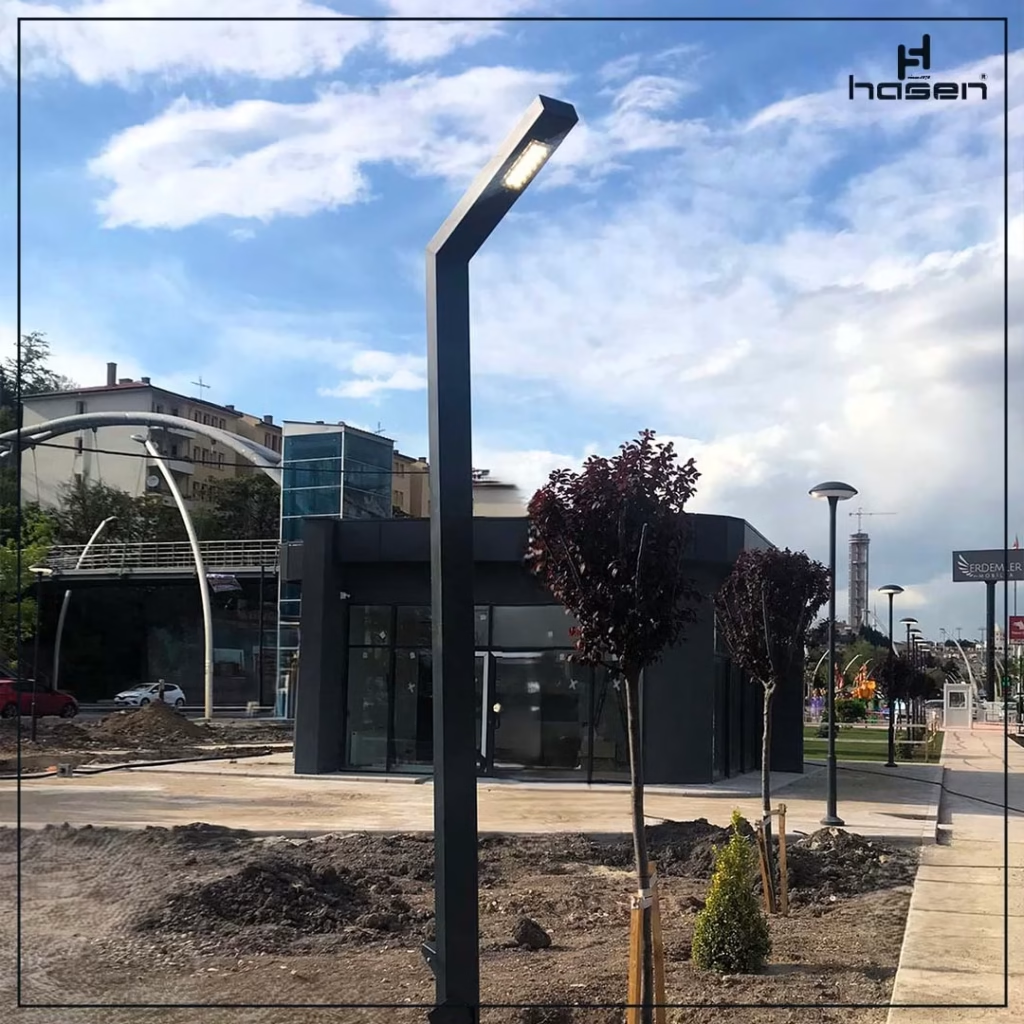
In modern urban planning and infrastructure projects, lighting systems are expected to be not only functional but also durable and aesthetically appealing. In this context, composite lighting poles stand out with their long service life, resistance to environmental conditions, and lightweight construction. These poles are manufactured from composite materials created by combining components such as fiberglass and polyester resin through specialized production techniques.
This manufacturing process provides the poles with both mechanical strength and resistance to challenging environmental conditions. Their resistance to factors such as humidity, rainfall, and salty coastal air enables reliable performance for many years. Thanks to their lightweight structure, composite lighting poles are easier to transport and install, helping reduce labor and installation costs. From an aesthetic perspective, different color and design options allow them to integrate seamlessly into modern urban and landscape projects.
What Features and Advantages Do Composite Lighting Poles Offer?
Composite lighting poles offer numerous technical and aesthetic advantages compared with conventional pole systems. Their high durability allows them to provide reliable performance for many years with relatively low maintenance requirements. Their resistance to weather conditions makes them particularly suitable for humid, rainy, and coastal environments exposed to salty air.
Another important advantage is their lightweight construction. This reduces the amount of equipment and labor required during installation. In addition, composite materials provide electrical insulation, offering an important safety advantage. The risk associated with electrical conductivity in metal poles can therefore be significantly reduced with composite structures.
From an aesthetic perspective, these poles also contribute to urban design through different colors, finishes, and forms. Their long service life and low maintenance requirements help preserve the value of the investment while offering cost advantages over the long term.
What Materials Are Used in the Production of Composite Lighting Poles?
The materials used in the manufacture of composite lighting poles directly affect their performance and durability. Fiberglass and polyester resin are generally the primary structural materials. Fiberglass provides high strength and flexibility, while polyester resin binds the structure together and helps create a durable, long-lasting product.
Special additives may also be incorporated into the material to improve resistance to UV radiation or fire, depending on project requirements. These additions help protect the pole against external influences while preserving its surface appearance for longer periods.
Another important element of the manufacturing process is the layered composite structure. Fiberglass layers are reinforced with resin to create a product that combines low weight with high mechanical strength.
How Resistant Are Composite Lighting Poles to Corrosion and Rust?
One of the most common challenges associated with conventional metal poles is corrosion and rust, particularly in humid climates and coastal environments where maintenance requirements can increase considerably.
Because fiberglass-reinforced composite materials do not rust like conventional steel, composite lighting poles provide strong resistance to corrosion. The fiberglass and resin structure maintains its performance when exposed to moisture and atmospheric conditions.
This makes composite poles a long-lasting solution for locations where corrosion is a major concern. Their maintenance requirements are generally low, with routine surface cleaning often being sufficient. UV-resistant surface systems can also help reduce sunlight-related deterioration, color fading, and surface damage.
Their resistance to corrosion makes composite lighting poles particularly suitable for urban street lighting, bridges, coastal environments, parks, and other demanding outdoor applications.
For a comparison with another highly corrosion-resistant material used in outdoor pole systems, you can also read our guide on why stainless steel is preferred for outdoor poles.
Where Are Composite Lighting Poles Used?
Composite lighting poles can be used in a wide variety of applications, including urban street lighting, parks and gardens, coastal areas, parking facilities, shopping centers, and special-purpose projects.
Their combination of low weight and high structural strength makes transportation and installation easier. Their electrically insulating properties can also provide an additional safety advantage in environments where public interaction with lighting infrastructure is high.
Why Are Composite Lighting Poles Advantageous for Urban and Street Lighting?
Lighting poles used in urban areas and streets need to combine safety, durability, and visual compatibility with the surrounding environment.
Composite lighting poles meet these requirements by providing strong corrosion resistance and electrical insulation compared with conductive metal structures. These characteristics can offer important advantages for both public and environmental safety.
Their lightweight yet durable structure simplifies installation, can reduce labor requirements, and allows different design options to be adapted to modern urban architecture.
These advantages are valuable not only for streets but also for parks, gardens, pedestrian areas, and coastal landscaping projects.
A correctly selected pole should be compatible with the weight of the luminaire it will support, the climatic conditions of the installation area, and the surrounding landscape design. When these factors are evaluated together, better results can be achieved in terms of both safety and visual integration.
For pedestrian-oriented projects, our guide on how walkway lighting systems should be planned provides additional information about lighting layout and project planning.
How Should Composite Lighting Poles Be Selected for Parks, Gardens, and Coastal Areas?
Pole selection for parks, gardens, and coastal environments requires both aesthetic and technical considerations. Composite lighting poles offer practical solutions for these applications thanks to their lightweight construction, corrosion resistance, and adaptable designs.
The main factors to consider are:
- Load and Structural Strength: The pole should be designed to safely support the weight and wind load of the lighting fixture.
- Weather Resistance: It should provide sufficient resistance to wind, rain, humidity, UV exposure, and salty coastal air.
- Aesthetic Compatibility: The color, form, and finish should complement the surrounding park, garden, or landscape design.
- Ease of Installation: Lightweight construction can allow faster transportation and installation while reducing equipment requirements.
Why Can Composite Lighting Poles Offer Safety Advantages Over Metal Poles?
Compared with conventional metal poles, composite lighting poles can provide several safety advantages.
Corrosion and rust in metal poles may lead to structural deterioration if the material or protective surface system is not properly maintained. Metal is also electrically conductive, which requires appropriate grounding and electrical safety precautions.
Composite materials, on the other hand, are naturally electrically insulating and highly resistant to corrosion. These characteristics can contribute to both user safety and the long-term reliability of the installation.
Their lightweight structure can also make transportation, handling, and installation easier, while their high-strength composite construction provides resistance to wind loads and mechanical stresses when properly engineered.
For projects with unique structural, dimensional, or environmental requirements, custom-manufactured pole systems and project solutions can also be developed according to site-specific engineering criteria.
How Do Composite Lighting Poles Provide Electrical Insulation?
Electrical safety is a critical consideration in lighting pole applications.
The combination of fiberglass and resin used in composite lighting poles creates a non-conductive structure. This property helps prevent electrical current from being transmitted through the pole body to surrounding surfaces or users.
This insulating characteristic provides an important advantage in public areas such as urban streets, parks, gardens, and pedestrian zones.
Compared with conductive metal structures, composite poles can reduce risks associated with accidental electrical contact when the entire lighting installation is correctly designed and maintained.
Do Composite Lighting Poles Make Transportation and Installation Easier?
Composite lighting poles provide significant advantages during transportation and installation thanks to their lightweight construction.
Traditional metal poles can require lifting equipment and larger installation teams because of their weight. Composite poles are considerably lighter, which can simplify logistics, reduce labor requirements, and shorten installation times.
Despite their lower weight, properly engineered composite poles are manufactured from high-strength materials and designed to meet the structural requirements of their intended application.
This characteristic is particularly advantageous for large-scale projects, remote locations, and areas where access for heavy installation equipment may be difficult.
Hasen Flagpoles provides durable and long-lasting pole solutions for a wide range of projects. With its production experience, material expertise, and project-oriented approach, the company continues to develop reliable solutions for urban lighting, parks, gardens, coastal areas, and other outdoor applications.