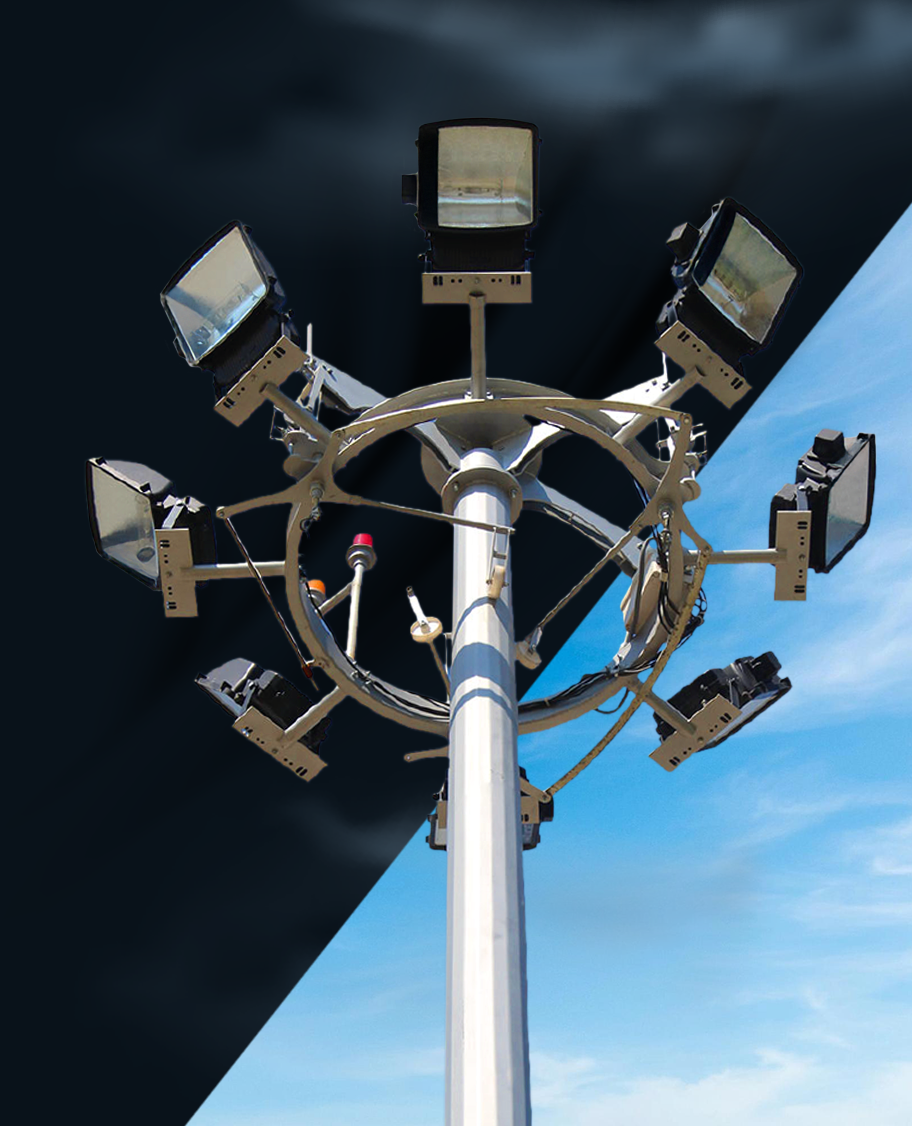
Floodlight Pole Models
Floodlight poles, which support lighting systems capable of turning night into day with their illumination power, are manufactured for use at airports, stadiums, bridge toll booths, parking areas, squares, and highways. With their modern designs and production in different heights, floodlight poles can now offer solutions suitable for a wide range of needs. The floodlight pole models of Hasen Paslanmaz, which has been serving the industry for half a century, are also frequently used both in Türkiye and abroad.
What Is a Floodlight Pole and Where Is It Used?
A floodlight pole, which we frequently encounter in modern urban life, is a load-bearing system made of steel or another suitable metal construction and designed to position lighting fixtures at a certain height. The role of the pole is not limited to carrying the luminaire; it must also withstand horizontal loads caused by wind, allow floodlights to be securely fixed, and enable maintenance operations when necessary. Floodlight poles are preferred in different usage scenarios, from open parking lots to factory sites, from logistics centers to sports facilities, and from construction sites to warehouses.
What Are the Types of Floodlight Poles?
Manufactured from hot-dip galvanized steel, floodlight poles are used effectively in many areas thanks to their durability against demanding field conditions and reliable engineering designs. The main types of floodlight poles include:
- Single-Floodlight Poles: Preferred for small and medium-sized areas such as parking lots, building surroundings, or the illumination of a specific zone.
- Poles Carrying Multiple Floodlights: Help illuminate large areas with fewer poles, providing effective regional lighting.
- Floodlight Poles with Brackets: These are poles where floodlights are mounted on horizontal support arms at the top of the pole. This structure allows multiple floodlights to be directed in different directions and enables wider areas to be illuminated more evenly.
Application Areas of Floodlight Poles
Since the needs of every area are different, the pole section, height, and top structure may vary according to the project. The areas where the floodlight poles we manufacture at Hasen Paslanmaz are frequently used include:
- Airport apron areas
- Surroundings of shopping centers
- Ports and loading areas
- Industrial production facilities and factory sites
- Stadiums and sports complexes
- Open and indoor parking areas
- Bridge toll booths
- Construction sites and warehouses
- Public spaces and event areas
Use of LED Floodlights on Floodlight Poles
LED technology is frequently preferred because it can reduce the energy consumption and maintenance requirements of luminaires used on floodlight poles. One of the common mistakes we encounter in fieldwork is actually related to this issue. This is because the pole and lighting layout should be created by looking only at the wattage value of the LED floodlight. However, two different LED floodlights with the same power may not have the same optical structure. While one luminaire distributes light at a wide angle, another may produce a narrower beam of light. Therefore, floodlight selection and pole height should be evaluated together. The positioning of the floodlights on the pole is also important. If multiple luminaires are to be used, directing all of them in the same direction instead of creating different angles according to the usage scenario of the area may provide a more homogeneous result. In this way, it may be possible to achieve more balanced lighting without increasing the number of poles. If LED floodlights are to be used in the system, the following technical data should be considered:
- Luminaire weight and mounting method
- Wind-exposed surface area of the floodlight
- Beam angle and light distribution
- Mounting height of the pole
- Number of floodlights
- Load-bearing capacity of the bracket or crossarm
- Wind conditions in the area where the pole is installed
What Should Be Considered When Choosing a Floodlight Pole?
As with flagpoles and lighting poles, when choosing a floodlight pole, all conditions of the project should first be evaluated rather than focusing solely on the product price. In general, however, the following points should be given particular attention during selection:
Pole height: The height of floodlight poles must be adjusted in a very balanced way. A pole that is unnecessarily high or low may prevent the light from reaching the intended area correctly.
Load-bearing capacity: The pole must safely support not only the weight of the floodlights but also the brackets, fasteners, and other upper-structure loads. If multiple floodlights are used, the total load must be calculated.
Wind load: Wind effect is an important design criterion in pole manufacturing. As the surface area of the floodlights increases, the wind load acting on the pole also increases. Therefore, pole selection should be made by taking the wind conditions of the region into account.
Pole material and wall thickness: The material used and the thickness of the profile or sheet metal directly affect the strength of the pole. For poles to be used outdoors, appropriate surface protection against corrosion should also be evaluated.
Number and positioning of floodlights: A single-floodlight system and a multi-floodlight system do not require the same structure. The angles at which the floodlights will be positioned also determine the design of the bracket or crossarm.
Foundation and connection system: In flanged models, the base plate, anchor bolts, and reinforced-concrete foundation should be evaluated together. Correctly fixing the pole to the ground is just as important as the strength of the pole itself.
Ease of maintenance and access: The maintenance method should be considered in advance for cleaning the floodlights, replacing luminaires, and checking connections. Especially for high poles, access of maintenance equipment to the site should be taken into account.
What Determines Floodlight Pole Prices?
It is not really possible to determine floodlight pole prices based only on dimensions or material. The height of the pole, the type of material to be used, the number of floodlights it will carry, the amount of material used in production, and the design features of the pole all have a determining effect on price. A pole produced in standard dimensions may not have the same cost as a pole specially designed for a specific project. The area where the pole will be installed is also taken into account in pricing. Models to be used in areas exposed to outdoor conditions and high wind loads may require different technical specifications. Therefore, when evaluating floodlight pole prices, the conditions of the application area and the required technical features should be considered together rather than looking only at the initial purchase price of the product.
Frequently Asked Questions
How Tall Should a Floodlight Pole Be?
Floodlight poles can be manufactured in heights ranging from 4 meters to 100 meters.
Where Are Floodlight Poles Used?
Floodlight poles have a very wide range of applications because they are frequently preferred for controlled illumination of large and open areas. Factories and industrial facilities, parking areas, logistics centers, warehouse yards, sports facilities, construction sites, open storage areas, stadiums, and building surroundings are among their main application areas.
What Materials Are Floodlight Poles Made Of?
The most commonly used materials for floodlight poles are steel and stainless steel. Material selection is made according to the environment in which the pole will be used, the load it must carry, and corrosion conditions. At Hasen Paslanmaz, we also manufacture high-strength floodlight poles made from hot-dip galvanized steel.
How Many LED Floodlights Can Be Mounted on a Floodlight Pole?
The number of LED floodlights that can be mounted on a floodlight pole depends on the design and load-bearing capacity of the pole. In addition to single-floodlight models, bracketed or crossarm systems capable of carrying multiple luminaires can also be used.