

© 2026 Hasen Paslanmaz. All Rights Reserved.
Designed by Pandora Ajans
Solar lighting poles, preferred in areas where access to the power grid is difficult, are now widely used in many areas.

We illuminate every dark place with our lighting poles, manufactured from high-quality materials in accordance with the standards set by the Turkish Electricity Distribution Corporation (TEDAŞ).


Solar Bollards powered by solar energy are easy to install, automatically turn on at dusk, and provide continuous, reliable lighting.

Decorative Lighting Poles, with their aesthetic design suited to the texture of the space, are custom-made for each project and feature decorative embellishments.

Lighting pole models, designed to provide safe, functional, and aesthetically pleasing illumination for outdoor spaces, are manufactured in different designs and dimensions according to the requirements of the application area and the characteristics of the lighting system. From streets and avenues to parks, gardens, residential complexes, and commercial premises, lighting poles offer a wide range of applications when combined with suitable lighting fixtures. With half a century of experience in manufacturing flagpoles and lighting poles, Hasen Paslanmaz provides durable, functional, and aesthetically designed solutions tailored to the needs of different outdoor projects.
A lighting pole is a supporting structure that positions lighting fixtures at a specific height to provide sufficient and controlled illumination in outdoor areas. The height, material, design, and fixture configuration of the pole are determined according to the characteristics of the area to be illuminated and the specific requirements of the project.
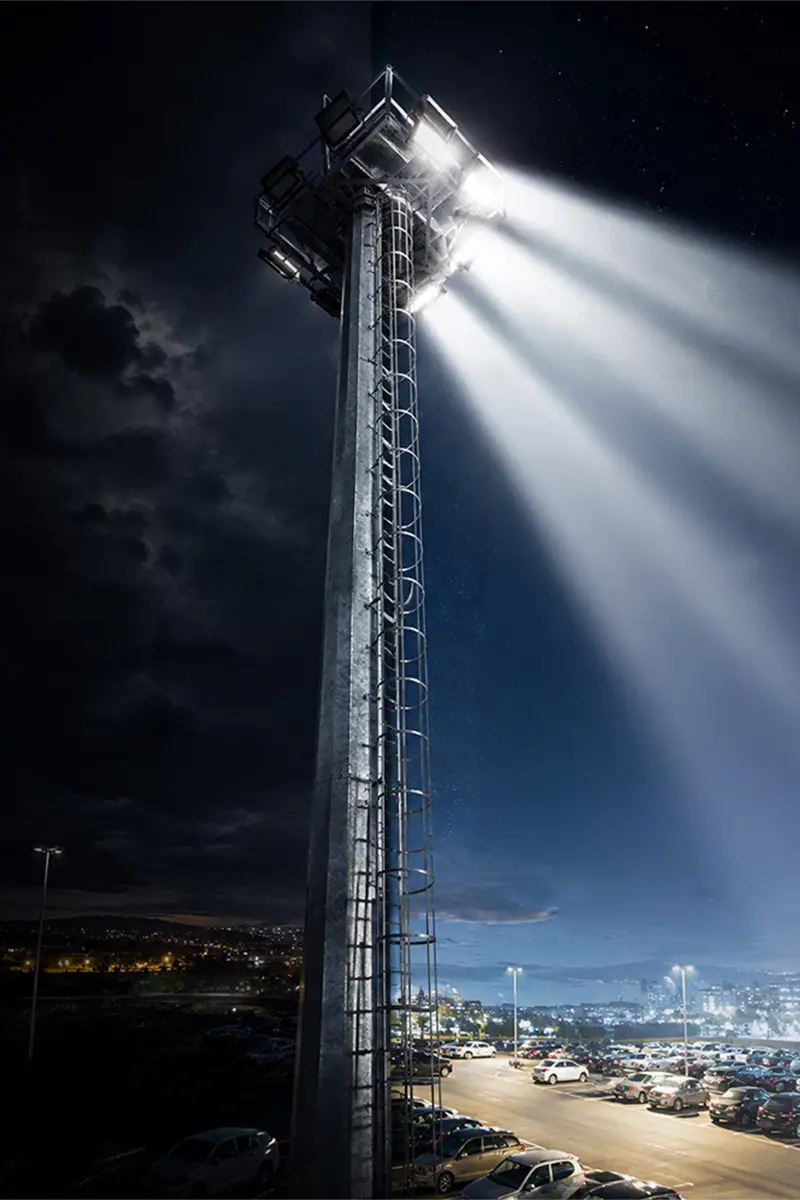
Lighting poles can commonly be used in:
Lighting poles can be classified according to various characteristics such as their intended use, manufacturing material, height, design, number of fixtures they carry, and installation method. Depending on the requirements of the project, single-arm, double-arm, or different fixture configurations may be preferred.
When evaluated according to their application areas, street lighting poles are among the most common solutions for road and avenue lighting, while models with different designs can be preferred for parks, gardens, residential areas, and commercial environments.
Lighting poles used in street and road lighting systems help provide adequate visibility in areas with both vehicle and pedestrian traffic. The width of the road, the length of the area to be illuminated, the distance between poles, and the specifications of the lighting fixtures should all be considered during the selection process.
In particular, when selecting a street lighting pole, the height of the pole and the positioning of the fixture are important for distributing light evenly across the road surface. Road lighting poles can also be produced with different technical specifications according to road width and operating conditions.
For large outdoor areas requiring powerful illumination, floodlight poles can also provide an effective solution depending on the technical requirements of the project.
In parks, gardens, and other outdoor areas, providing sufficient illumination is not the only consideration. The overall aesthetic appearance of the environment is also important. Therefore, park lighting poles can be selected not only according to their functional characteristics but also according to their compatibility with landscape and architectural design.
Lighting poles used along walking paths, green areas, residential gardens, hotel surroundings, and recreational spaces can be manufactured in different heights and designs according to the intended use of the area.
Outdoor lighting poles can also be used to illuminate large areas such as factories, industrial facilities, parking areas, residential complexes, and commercial properties. Selecting the appropriate pole height and lighting fixture according to the size of the area and its lighting requirements is essential.
For additional information about lighting solutions designed specifically for gardens, you can also review the factors affecting garden lighting pole prices.
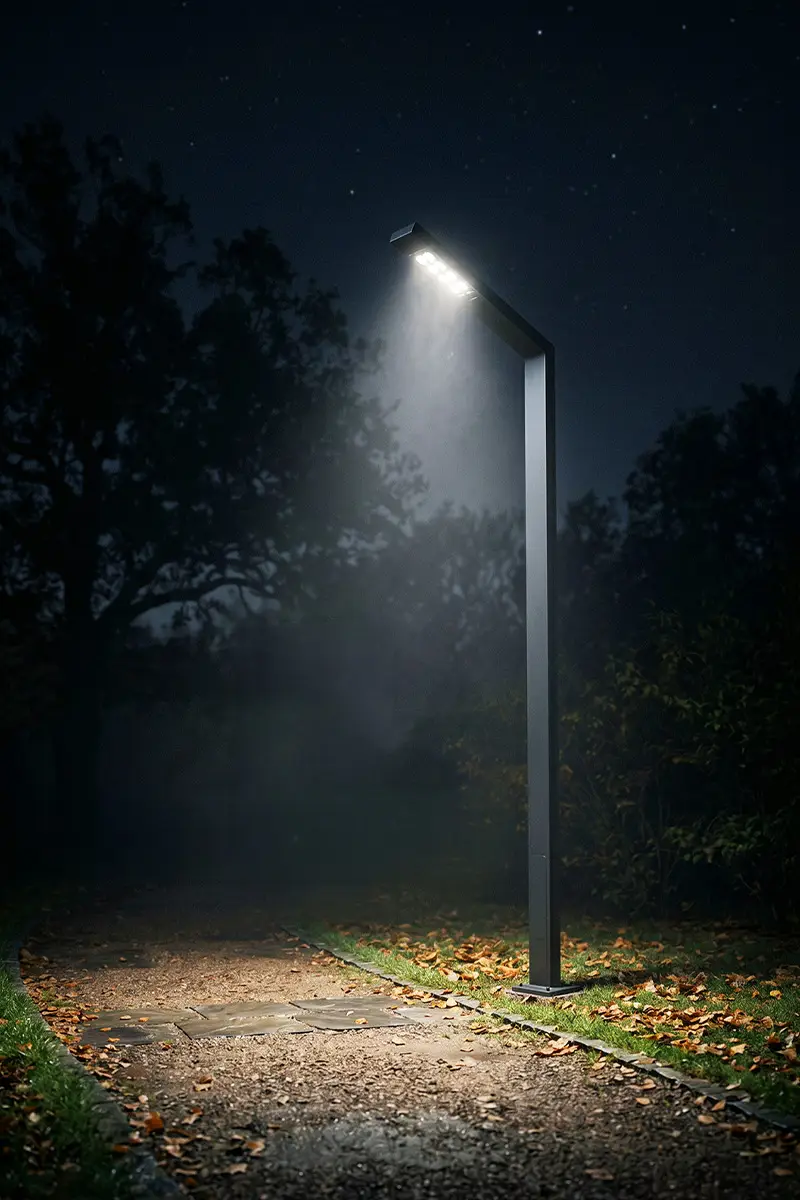
Lighting poles used outdoors may be exposed to various environmental conditions such as rain, humidity, sunlight, wind, and temperature changes. For this reason, the material structure of the product and its surface protection are important criteria for long-term use.
A galvanized lighting pole has a steel surface protected with a galvanized coating, helping improve its resistance to outdoor conditions. Galvanizing is one of the most commonly preferred surface treatments, particularly in applications where corrosion may be a concern.
Evaluating the climate and environmental conditions of the installation area and selecting an appropriate material and surface treatment can contribute significantly to the long-term performance of the pole. More information about material selection for outdoor structures can be found in Hasen's article on why stainless steel is preferred for outdoor poles.
When selecting a modern lighting pole, durability and suitability for operating conditions are just as important as design. The table below summarizes the main design and material criteria that should be evaluated when choosing a lighting pole.
| Design and Material Criterion | Points to Consider |
|---|---|
| Design | The form of the lighting pole should complement the architectural structure and overall appearance of the area where it will be installed. |
| Material | Durable and long-lasting materials suitable for the environmental conditions of the application area should be preferred. |
| Pole Height | The height should be determined according to the size of the area, lighting requirements, and specifications of the lighting fixture. |
| Arm Structure | Single-arm, double-arm, or custom-designed configurations should be evaluated according to the lighting requirements of the project. |
| Corrosion Resistance | For outdoor applications, resistance to humidity, rainfall, and other environmental conditions should be taken into consideration. |
| Fixture Compatibility | The weight, dimensions, and mounting method of the lighting fixture should be compatible with the technical specifications of the pole. |
| Environmental Compatibility | In parks, gardens, residential developments, and commercial areas, the design of the pole should complement landscaping and architectural elements. |
| Maintenance Requirements | Materials and surface treatments should also be evaluated in terms of maintenance requirements and long-term performance. |
In modern projects, conventional lighting systems can also be supported by alternative technologies. For example, solar lighting poles can be considered for suitable projects, particularly in locations where access to the electrical grid is limited.
To select the right lighting pole, several technical and application-related factors should be evaluated together.
Lighting pole prices may vary according to the technical specifications of the product, the material used, and the requirements of the project. Pole height, diameter, manufacturing material, design, arm structure, and surface treatments are among the main factors affecting pricing.
Custom dimensions, special design requirements, and project-specific technical specifications may also influence the final price. Therefore, when evaluating lighting pole prices, it is important to consider not only the visual appearance of the product but also its technical specifications and operating conditions.
Street lighting pole prices, in particular, can vary depending on the dimensions, material, technical characteristics, and overall scope of the project. To determine the most suitable solution, the characteristics of the application area and the technical expectations of the project should be evaluated in advance.
Hasen Paslanmaz provides lighting pole solutions for a wide range of applications, helping projects evaluate suitable products according to their specific requirements. You can contact Hasen Paslanmaz to obtain detailed information about suitable lighting pole models, technical specifications, and project-based pricing.
There is no single standard answer to this question. The required height of a lighting pole depends on factors such as the size of the application area, the characteristics of the area to be illuminated, the distance between poles, and the technical specifications of the lighting fixtures.
Street lighting poles are generally manufactured from durable materials such as steel. Surface treatments such as galvanizing may also be applied to improve resistance to outdoor environmental conditions.
Galvanized lighting poles are preferred because the galvanized coating helps protect the steel surface against corrosion and contributes to durability under outdoor conditions. They are particularly suitable for areas exposed to rain, humidity, and similar environmental factors.
When selecting lighting poles for parks and gardens, the size of the area, lighting requirements, pole height, type of lighting fixture, and product design should be evaluated together. The compatibility of the pole with the landscaping and surrounding architecture is also important from an aesthetic perspective.
Lighting pole prices may vary depending on the material used, pole height and diameter, design, arm configuration, surface treatments, and manufacturing specifications. Custom dimensions and project-specific design requirements may also affect pricing.
Yes. Lighting poles can be manufactured in different dimensions and design configurations according to the technical requirements of the project and the characteristics of the application area.